



 Kazanan













































Hakan MelekElif Melek
Web design
Technical Partner for Nontechnical Founders
Stay in control of your product while getting technical support. A software partnership starts with understandable decisions, visible budget effects, and clear responsibility for code, accounts, and delivery.
Ücretsiz · 24 saatte yazılı dönüş · Bağlayıcı değil
300+ marka · 10+ yıl · 6 ülke
A technical partner makes decisions understandable
You do not need to memorise framework names to explain a product idea. Technical leadership support translates business goals into options and consequences. Which decision matters now, which can wait, and which choice changes cost or maintenance? Understanding these questions allows a founder to participate meaningfully. The partner creates a clear decision process rather than taking every responsibility away from the business.
Initial discussion covers the intended audience, available customer evidence, and first commercial objective. Instead of a broad ambition to build a large platform, we define the first complete job. When technical language is needed, its business effect is explained: an integration’s data delay, a mobile app’s publishing requirements, or the recurring cost of custom development. A decision record shows the recommendation, alternatives, and conditions that would justify reviewing it later.
Separate delivery partnership, advice, and technical cofounder roles
An MVP development team can own a defined delivery, while a technical cofounder may have wider and longer-term responsibilities inside the company. An external partnership does not automatically imply equity ownership or responsibility for every technology decision. Separating advice, implementation, and operations protects both parties from unclear expectations.
The working agreement identifies decisions retained by the founder, recommendations made by the technical team, and approval ownership. For example, the pricing model is a commercial decision, while how a payment system can support it requires technical review. Coordination across several suppliers is a separate responsibility. Equity and ownership conditions are not inferred from a service-page label; they require an explicit agreement and appropriate professional review. Clarifying the model early reduces later disputes about accounts, code, and responsibilities.
Delivery partner
Produces a defined design and development scope, with acceptance and handover conditions in the agreement.
Technical adviser
Explains alternatives and reviews decisions. Code implementation may require a separate scope.
Internal technical leader
May own recruitment, an internal team, and ongoing company technology management. This is not assumed to be identical to an external service.
Translate the idea into observable behaviour
Turning a founder’s needs into a product delivery plan starts with behaviour before screens. What does the user do, what information is required, and what happens when an action fails? In an illustrative membership product, requesting a pricing page is insufficient: upgrades, cancellation, and changes in access are product decisions too. Concrete scenarios reduce the need for developers to guess.
The requirement record explains successful and unsuccessful paths in readable language. A prototype helps test whether users understand those scenarios. New requests are assessed against the objective instead of automatically entering the development queue. Acceptance review is understandable to the founder. Progress is not just a percentage or a count of technical tickets; completed user journeys, open decisions, and the next dependency should be visible.
Agree ownership of code, data, and accounts at the start
When setting up the release infrastructure, ownership of domains, hosting, repositories, and external service accounts is explicit. A founder may not perform the technical work but still needs appropriate control over important business resources. Inaccessible accounts can become a more fundamental problem than development when a supplier changes.
Handover can cover source code, setup notes, dependencies, and required permissions. Third-party licence conditions are not confused with ownership of custom code. Appropriate users and permissions are preferable to one shared password. Secret keys and customer data are excluded from decision reports. Backup and recovery ownership is considered separately: saying that a backup exists does not demonstrate operational readiness. The agreement should identify who checks it and what happens when an incident occurs.
01
Resource inventory
List domains, code, data, and service accounts with their owners and access responsibilities.
02
Handover conditions
Specify which documents and permissions are delivered and when. Keep licence limitations visible.
03
Operational contact
Assign business ownership for releases, backups, support, and service billing rather than leaving them with an unnamed supplier.
Explain budgets and change requests as business decisions
Connecting the technical scope to a first-release plan makes proposals easier to compare. One quote may include design and testing while another covers coding alone. Review included tasks, approval requirements, integration dependencies, and post-release responsibilities before comparing totals. Undefined support and a specific defect-correction scope are different commitments.
A new feature request is explained through value, effect on the objective, cost, and timing. Instead of saying only that something is difficult, the team identifies what makes the work larger. For example, moving from one user role to a permission-based team model changes data and access decisions as well as screens. Where important uncertainty remains, a small research task may be more useful than an apparently precise large estimate. The founder can then decide using clearer assumptions.
Plan the continuation or handover after launch
Market feedback from product evaluation informs the technical roadmap. Support requests, task completion, and operational effort are reviewed together. Before treating every request as a new feature, the founder considers whether the problem is understanding, process, or software. Sometimes clearer guidance or an operational adjustment is more suitable than more code.
Continuation can mean project-based additions, a defined recurring capacity, or transfer to an internal team. Each model has different knowledge-transfer and responsibility conditions. A supplier change requires a record of system state, open work, and access. The engagement is scoped through discovery; “technical partnership” does not imply unlimited capacity, continuous support, or a promise that redevelopment will never be required. A useful relationship helps the founder make better decisions about the product and the business behind it.
Continue delivery
Use a prioritised backlog and explicit capacity. Review new work through value, impact, and cost.
Move to an internal team
Transfer documentation, access, and known issues with a named acceptance owner.
Reassess the roadmap
Review the plan when product needs change. Following an outdated plan is not the purpose of a partnership.
Frequently asked questions
Anything else? Write to us.
Can I develop a product without technical knowledge?
Clear business goals and user needs are valuable starting inputs. The partner should explain technical choices in understandable terms. Product priorities and approvals do not disappear; the founder retains commercial responsibility even when implementation is delegated.
Does a software partner replace a technical cofounder?
A partner can take defined advisory and delivery responsibilities, but that is different from an internal founder role. Equity, management, and long-term team responsibilities require separate agreements. A service label does not automatically include them.
How should I compare proposals?
Compare included work, acceptance checks, integration dependencies, account ownership, and post-launch responsibilities. Similar prices can represent different scopes. Convert vague statements into explicit deliverables and exclusions before making the decision.
What happens when I request a new feature?
The team assesses value, effect on the objective, cost, and schedule. Approved scope changes are recorded. Every idea does not need immediate production; some should wait for customer evidence or data before committing further investment.
Can another team continue the product later?
That depends on code, data, licences, account access, and documentation. Handover conditions should be recorded early and verified at delivery. It is not possible to guarantee that any system can transfer without additional work.
Do I need a technical specification for the first meeting?
No. Describe the intended user, first complete job, current product or examples, and budget context. Technical details are clarified through discovery. Secret keys and customer records are not required through a public contact form.
Turn the idea into understandable technical decisions
Share the audience, first user task and current position. We can define roles, scope and delivery responsibilities together.
Ekibimiz doğrudan dönüş yapar
Web projeleri, markasıyla ve sesiyle.
Furkan BeyBayern Transport
Golden Key DubaiVideo yorum
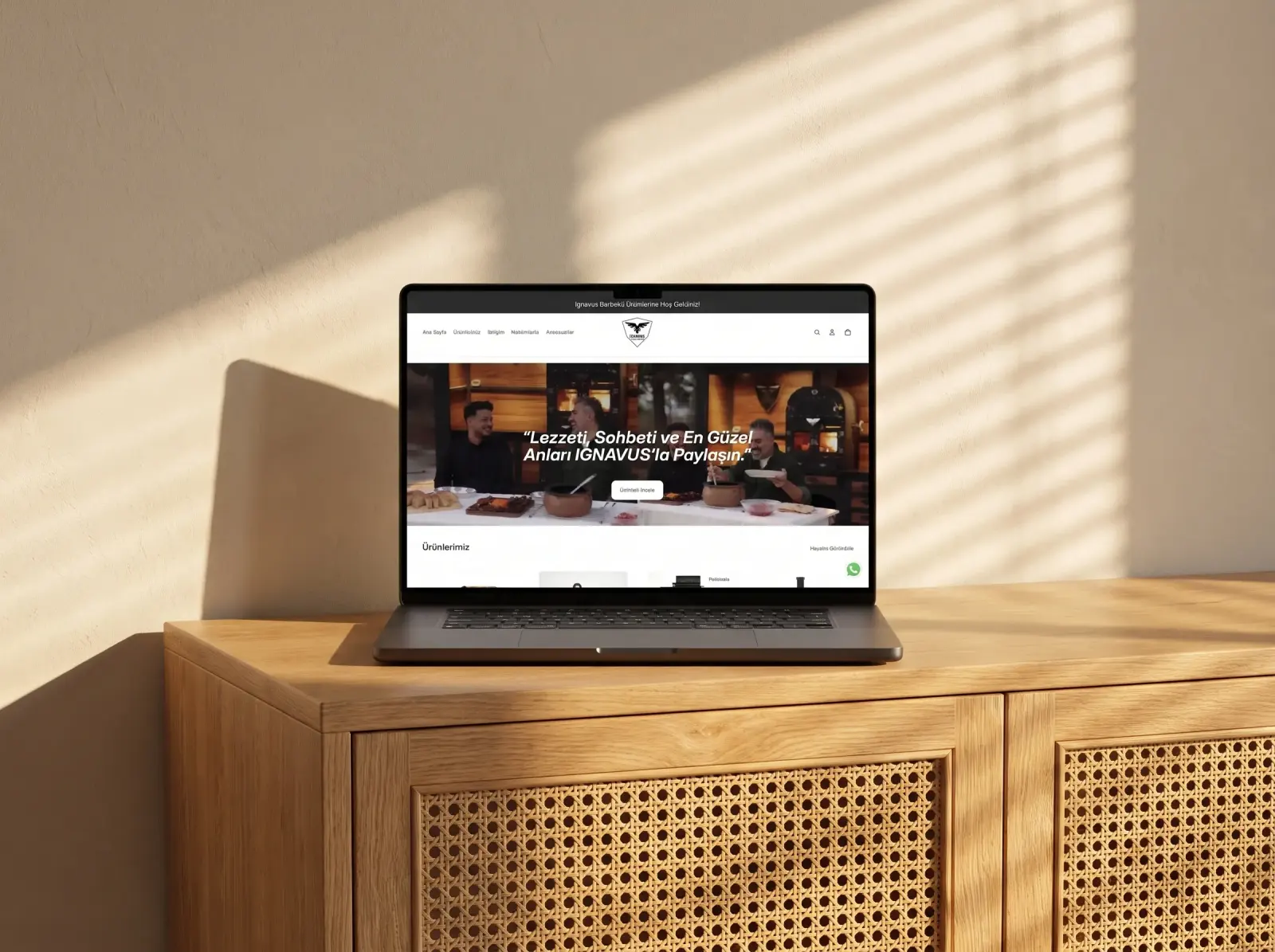
Ömer Özşahinezİgnavus Barbekü
Google yorumları
 Google
“Web sitemizi Prix Studio'ya tasarlatmak, gelirlerimizde önemli bir artış sağladı. Özgün ve etkileyici bir tasarım sayesinde müşterilerimiz de daha çok etki yaratmaya başardık ve satışlarımızda büyük bir ivme yakaladık.”
Google“Web sitemizi Webflow’a taşıma sürecinde Prix Studio’nun uzmanlığı bize büyük fayda sağladı; özellikle ürün sayfalarının tasarımı, 3d görseller ve kullanıcı deneyimi konusunda başarılı bir iş çıkardılar. Bu teknik altyapıdan sonra SEO çalışmalarımızda da yine Prix Studio ile ilerlemeye karar verdik. Teknik SEO ve site hızı optimizasyonu konusunda verimli sonuçlar aldık, baştaki içerik stratejisi farklılıkları zamanla yerini ortak bir yaklaşıma bıraktı. Şu anda hem tasarım hem arama motoru görünürlüğü açısından istikrarlı bir yükseliş içindeyiz.”
Google“Bir online eğitim akademisi olarak önceliğimiz öğrencilerimizin kullanabileceği anlaşılır bir arayüz tasarımına sahip web sitemizin olmasıydı. Prix Studio online eğitim web site yazılım şirketi, ile birlikte bunu başardık. Kullanıcı dostu ve temiz bir arayüze sahip web sitemiz oldu. İşlerindeki başarıları ve kaliteleri ile kesinlikle tavsiye edebileceğimiz bir kurum.”